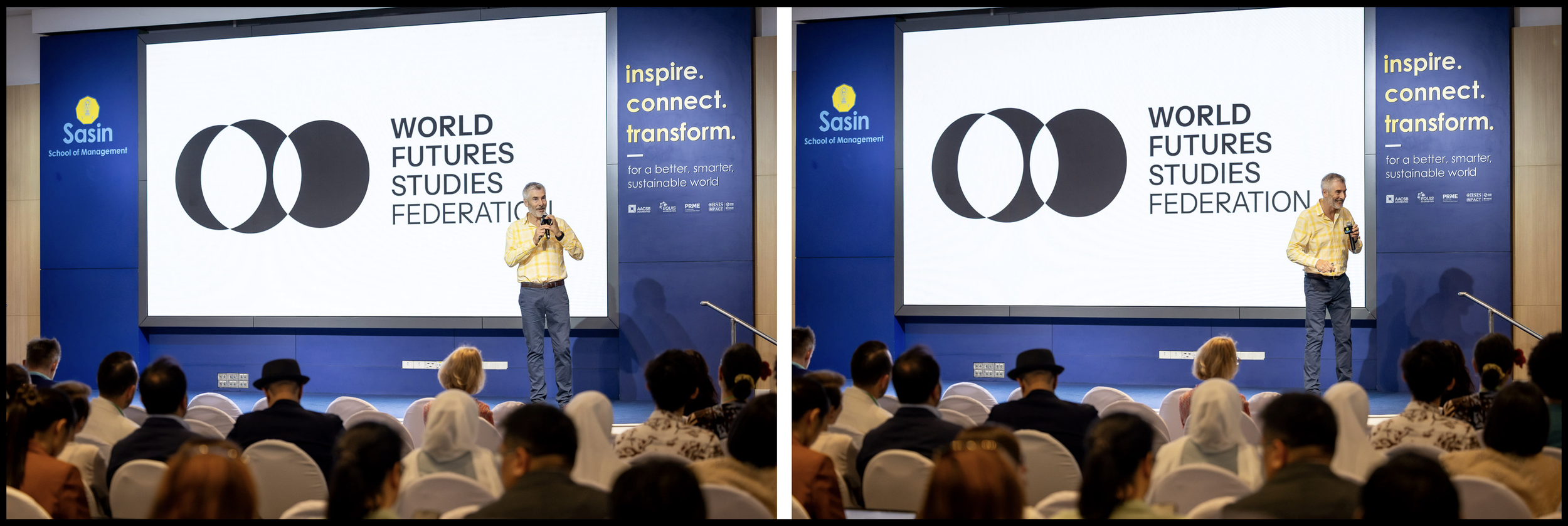
The World Futures Studies Federation is a global network of leading professionals in the field of futures studies in 60+ countries. Sean is therefore proud to be the Director of Public Affairs for the Federation.
A UNESCO and UN consultative partner, and the peak forum for futures studies scholarship, the WFSF is a non-commercial NGO. It offers a forum for the discussion, exploration & exchange of ideas, visions & plans for alternative futures; through long-term, big-picture thinking & radical change.
His role involves helping the team strengthen the WFSF brand and he’ll be conducting this activity in addition to our other ongoing work, including with the renowned Copenhagen Institute for Futures Studies.
Below are photos of Sean lecturing about futures-literacy at University of the Arts London, and Brighton University. Both cutting-edge establishments are of course deeply futures-focused, and he’s enjoyed being an external lecturer there for years re: foresight / strategy / innovation.
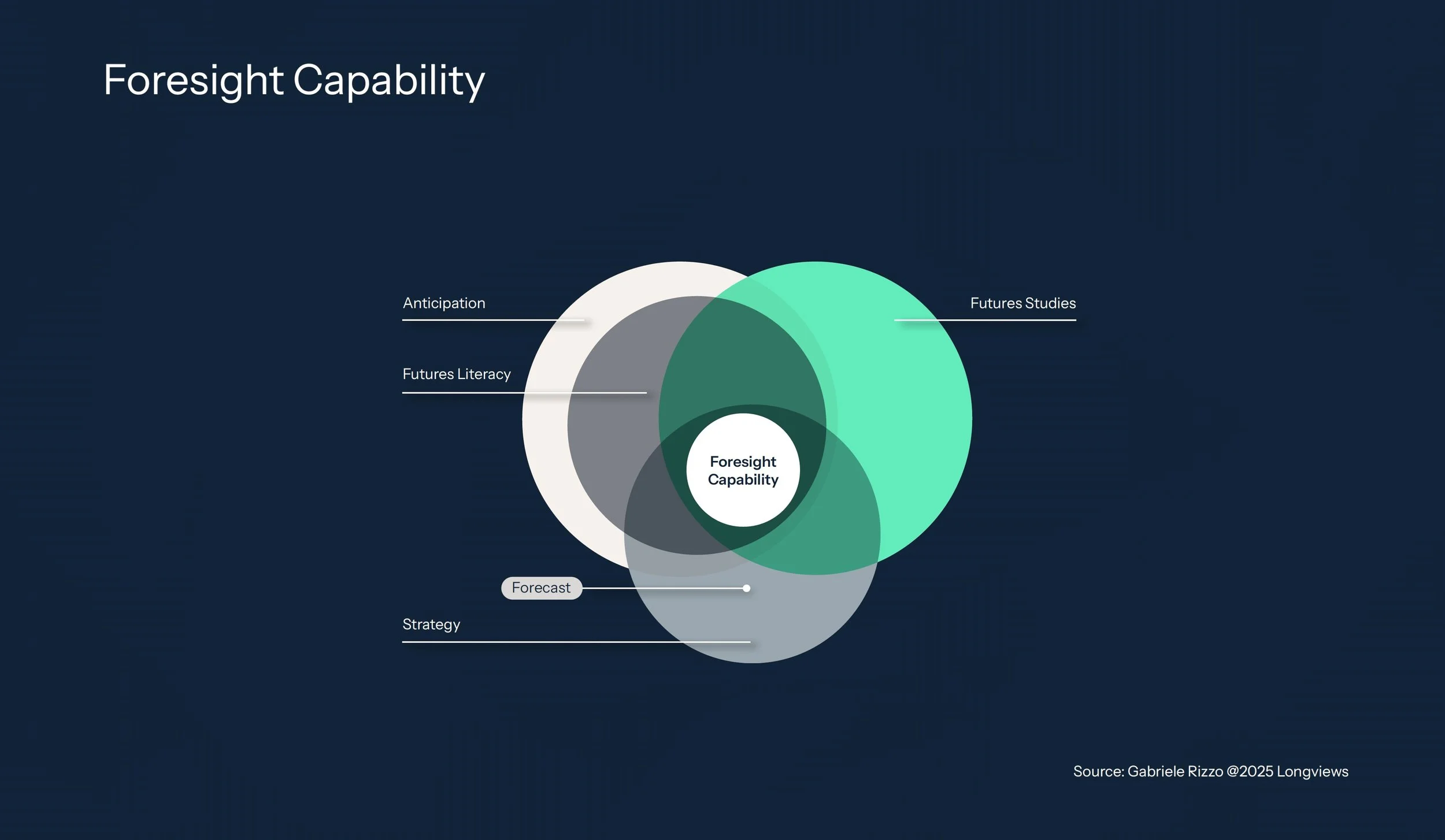
‘Foresight Capability’
In his recent webinar for the Federation, Gabriele Rizzo argued that the futures-discipline is at a critical juncture. While interest in futures thinking is expanding, its intellectual foundations remain diffuse, with overlapping concepts often treated as competing rather than complementary domains. This fragmentation risks undermining both methodological rigour and the development of practitioners.
Drawing inspiration from the Langlands program in mathematics, he proposed a ‘language program for futures’. The analogy was deliberate: just as the Langlands program connects different mathematical languages through shared structures, a comparable framework in futures studies could map relationships across its various subfields without collapsing their distinctions.
Language is important: without shared definitions and conceptual clarity, the field risks incoherence and weak knowledge accumulation. Establishing common foundations wouldn’t standardise practice but rather strengthen the field’s ability to handle complexity and uncertainty. The goal is not to eliminate diversity of thought, but to create a stable platform from which futures studies can flourish more productively: balancing plurality with coherence as it seeks greater influence across policy, business and society.